Culture Shock to Cultural Confidence: A 2026 Mental Wellness Guide for Indian Students Abroad
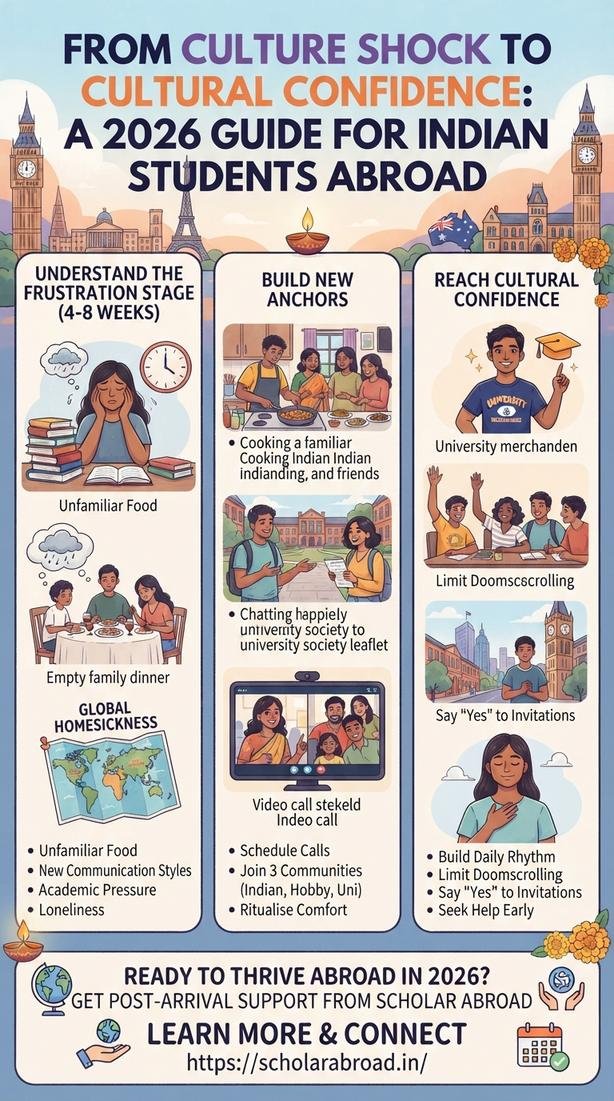
Culture Shock to Cultural Confidence: A 2026 Mental Wellness Guide for Indian Students Abroad
 scholarabroad
 From Culture Shock to Cultural Confidence: Your 2026 Roadmap
Estimated Reading Time: 8 minutes
Key Takeaways
- Culture shock is a predictable psychological response, not a personal weakness — it typically peaks 4–8 weeks after arrival abroad.
- Homesickness fades through intentional connection: scheduled calls, three community anchors, and comforting rituals.
- Managing anxiety while studying abroad requires daily rhythm, breathing techniques, journaling, and early access to campus counselling.
- Scholar Abroad provides dedicated post-arrival support, including buddy pairing, advisor check-ins, and mental health referrals for the critical first 12 weeks.
- Cultural confidence is built through curiosity, habits, and help — not by waiting for time alone to fix everything.
Table of Contents
- Understanding Culture Shock: Why It Hits Indian Students Hard
- Common Cultural Differences Indian Students Face Abroad
- Homesickness Coping Strategies: Practical Tools That Work
- Managing Anxiety and Stress While Studying Abroad
- How Scholar Abroad Supports Student Wellbeing Abroad
- Building a Social Life as an International Student
- Final Thoughts: Confidence Comes With Time, Help, and Habits
You have your visa, your university offer letter, and your packed bags ready. But no orientation session fully prepares you for the emotional rollercoaster of moving abroad. For most Indian students, the first few months overseas bring a strange mix of excitement, fatigue, and loneliness that can quietly spiral into serious stress. At Scholar Abroad, we have guided thousands of Indian families through this journey, and we know the difference between students who merely survive their first semester and those who genuinely thrive. This guide tackles culture shock head-on, with practical mental wellness strategies for 2026 and beyond.
Understanding Culture Shock: Why It Hits Indian Students Hard
Culture shock is not a sign of weakness — it is a predictable psychological response to losing familiar social cues, food, language rhythms, and support systems all at once. Indian students often face a distinct version of it: independence without the joint family safety net, freezing winters, unfamiliar food, indirect communication styles, and a sudden shift in how friendships are formed. Add academic pressure and financial anxiety, and you have a recipe for burnout.
Psychologists typically describe four stages: honeymoon, frustration, adjustment, and adaptation. The frustration stage — often arriving 4–8 weeks after landing — is when homesickness, irritability, and self-doubt peak. Recognising this timeline helps you normalise what you are feeling instead of panicking.
Common Cultural Differences Indian Students Face Abroad
- Conversations are more direct, and silence in classrooms can feel alienating.
- Small talk with strangers is normal; it is a bridge, not superficiality.
- Independent living skills — cooking, budgeting, laundry, appointments — become daily challenges.
- Festivals, prayer routines, and family gatherings look completely different.
- Part-time work culture and tipping norms vary dramatically by country.
Homesickness Coping Strategies: Practical Tools That Work
Homesickness does not vanish by force; it fades through connection and new anchors. Try these evidence-based approaches:
1. Schedule calls instead of spiralling
Daily video calls back home can feel comforting but often deepen grief. Instead, lock in two or three calls a week and fill the gaps with local activity.
2. Build a “third home”
Join one Indian student association, one hobby group (sports, music, coding, dance), and one university wellbeing programme. Three communities guard against loneliness better than one.
3. Ritualise comfort
Cook one familiar dish weekly, celebrate festivals with peers, or create a Sunday morning chai routine. Small rituals rewire the brain toward belonging.
Managing Anxiety and Stress While Studying Abroad
Academic life abroad rewards self-regulation. Build a simple daily rhythm — sleep at consistent times, walk 20 minutes outdoors, and eat at fixed hours. Limit news doomscrolling, especially late at night. When anxiety rises, use the 4-7-8 breathing method, journal three wins, and reach out to a friend within 24 hours. For prolonged low mood, contact your university’s counselling centre early; most institutions abroad offer free, confidential sessions.
How Scholar Abroad Supports Student Wellbeing Abroad
Scholar Abroad is more than a study-abroad consultancy. Our post-arrival support for Indian students studying overseas includes pre-departure counselling, buddy pairing with senior students on campus, emergency coordination with families in India, and referrals to licensed international student mental health resources. Every student we place gets a dedicated advisor who checks in during the critical first 12 weeks — precisely when culture shock is strongest.
We also run webinars on cultural adaptation for Indian students overseas, financial wellness, and exam-time stress management. Parents are invited to these sessions, because family understanding dramatically improves a student’s wellbeing and resilience abroad in 2026.
Building a Social Life as an International Student
Friendships abroad are intentional, not accidental. Say yes to your first three invitations, even if they feel awkward. Ask a classmate for coffee. Volunteer on campus. Use university societies and Meetup-style platforms. Being curious about local culture — while proudly sharing yours — often accelerates acceptance and gives you cultural confidence faster than any textbook.
Final Thoughts: Confidence Comes With Time, Help, and Habits
Culture shock is a rite of passage, not a verdict on your future. With the right habits, the right support network, and the right people beside you, homesickness transforms into homes-awareness, and cultural confusion becomes the confidence to thrive anywhere. If you are planning to study abroad in 2026, talk to Scholar Abroad — we do not just get you admitted; we walk with you until you feel at home in your new home.
Ready to start your journey with confidence? Connect with Scholar Abroad today and let us support you from admission to adaptation.