Low GPA or Study Gap? How Indian Students Can Still Get Admitted to Top Universities Abroad in 2026
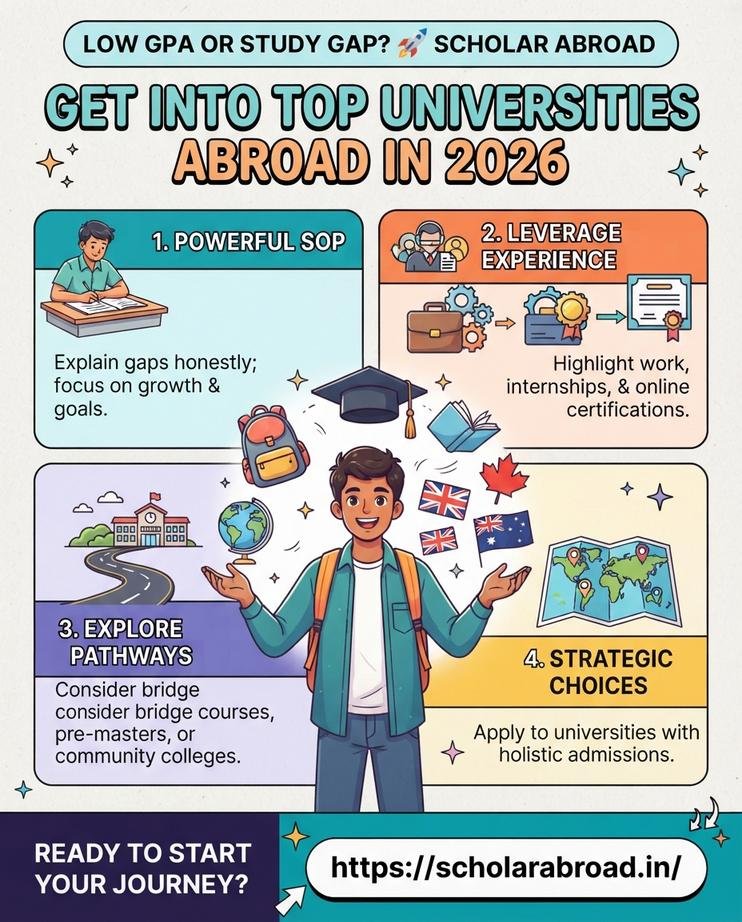
Low GPA or Study Gap? How Indian Students Can Still Get Admitted to Top Universities Abroad in 2026
 scholarabroad
Low GPA or Study Gap? How Indian Students Can Still Get Admitted to Top Universities Abroad in 2026
Estimated reading time: 8 minutes
Key Takeaways
- A low GPA or study gap is not a dealbreaker—admissions committees assess your whole profile, not just transcripts.
- A well-crafted SOP that honestly explains your study gap can turn a weakness into a story of growth.
- Work experience, certifications, and strong test scores can compensate for a low GPA.
- Pathway programs, pre-master’s courses, and holistic-review universities offer alternative admission routes.
- A professional profile evaluation helps you target the right universities and avoid wasted applications.
Table of Contents
- Why a Low GPA or Study Gap Is Not a Dealbreaker
- Strategy 1: Write a Strong Statement of Purpose (SOP) That Explains the Gap
- Strategy 2: Leverage Work Experience and Certifications
- Strategy 3: Target Alternative Admission Pathways Abroad
- Strategy 4: Address Backlogs Strategically
- Strategy 5: Get a Professional Profile Evaluation
- Strategy 6: Choose Universities and Countries That Fit Your Profile
- Strategy 7: Strengthen Other Parts of Your Application
- Key Takeaways for the 2026 Admissions Cycle
A low GPA or a study gap does not have to end your dream of studying abroad. Every year, thousands of Indian students with imperfect academic records gain admission to reputable universities overseas—not by hiding their weaknesses, but by strategically reframing their profiles. At Scholar Abroad, we have helped countless students turn a “weak” application into a compelling story of growth and potential. In this guide, we break down practical, proven fix-it strategies to help you secure admission to top universities abroad in 2026, even if your grades are not stellar or you have taken a break from studies.
Why a Low GPA or Study Gap Is Not a Dealbreaker
Admissions committees abroad look at the whole picture, not just a transcript. They assess your academic potential, motivation, work experience, and how you explain your circumstances. A low GPA or a study gap raises questions—but with the right explanation, you can turn those questions into opportunities to demonstrate maturity, resilience, and clear career focus. The key is to proactively address the gap or grades rather than leave the admissions officer guessing.
Common Scenarios Indian Students Face
- Low CGPA (below 60% or 6.0/10) in bachelor’s degree
- One or more backlogs during graduation
- A study gap of one or more years after graduation
- Low percentage in 12th or bachelor’s due to personal or health reasons
- Switching fields and lacking relevant academic background
Strategy 1: Write a Strong Statement of Purpose (SOP) That Explains the Gap
Your SOP is the most powerful tool to contextualise a low GPA or study gap. Instead of apologising, frame your story around what you learned during the gap, how you matured, or why your grades dipped and how you improved later. For example, if you had a family responsibility or health issue, mention it briefly and then pivot to how you overcame it. If you have work experience during the gap, highlight the skills you gained. A well-crafted statement of purpose explanation for study gap can reassure admissions officers that you are focused and ready for rigorous study.
What to Include in Your SOP
- Clear reason for the study gap (keep it concise and honest)
- What you did during the gap—courses, work, volunteering, certifications
- How the gap helped you clarify your career goals
- Why you are now prepared for the program
Strategy 2: Leverage Work Experience and Certifications
One of the best ways to compensate low GPA with work experience is to show that you have practical skills and industry exposure. Many universities abroad, especially in Canada, Australia, and the UK, value professional experience highly. If you have 1–2 years of relevant work experience, your application becomes stronger even if your GPA is below average. Additionally, online certifications from platforms like Coursera, edX, or university-run MOOCs can demonstrate your commitment to learning and fill academic gaps.
Strategy 3: Target Alternative Admission Pathways Abroad
Not every university requires a high GPA. Many institutions offer alternative admission pathways abroad, such as:
- Pathway programs and bridge courses that prepare you for master’s study and often guarantee progression upon successful completion.
- Pre-master’s programs in the UK, Australia, and Europe designed for students with lower grades or backlogs.
- Universities that focus on holistic review—those that consider work experience, SOP, and recommendations over grades.
- Community colleges in the USA that offer a route to a four-year degree with lower entry requirements.
In 2026, many bridge courses and pathway programs abroad have expanded, making it easier for Indian students with a weak academic profile to enter top-ranked institutions through a supported route.
Strategy 4: Address Backlogs Strategically
If you have backlogs and study abroad admission 2026 is on your mind, do not panic. Several universities accept students with cleared backlogs, especially if you can show improvement in later semesters. Some universities ask for a backlog certificate or a explanation letter. Keep your SOP consistent with your transcripts, and if possible, retake exams to clear backlogs before applying. Highlight any upward trend in your grades—admissions officers notice improvement.
Strategy 5: Get a Professional Profile Evaluation
Before applying, invest in a profile evaluation for low GPA students. An experienced counsellor can assess your chances, suggest universities that match your profile, and help you build a strategy. At Scholar Abroad, we offer personalised profile evaluations that consider your grades, backlogs, work experience, and study gap to recommend realistic and ambitious options. This prevents wasted applications and increases your chances of acceptance.
Strategy 6: Choose Universities and Countries That Fit Your Profile
Instead of aiming only for ultra-competitive universities, broaden your list to include institutions known for holistic admissions. Countries like Germany, Canada, Australia, and New Zealand have diverse institutions with varying entry requirements. Some universities in Europe (e.g., in Germany or the Netherlands) may have specific GPA cut-offs, but others focus on motivation and relevant experience. Research thoroughly and apply to a mix of safe, moderate, and ambitious schools.
Strategy 7: Strengthen Other Parts of Your Application
Your GPA is just one factor. Compensate with:
- Strong letters of recommendation from professors or employers who can vouch for your skills.
- High test scores (GRE, GMAT, IELTS, TOEFL) if the university requires them—a high GRE can offset a low GPA.
- A portfolio or writing sample if applying to creative or research programs.
- An interview that showcases your communication skills and motivation.
Key Takeaways for the 2026 Admissions Cycle
The 2026 intake will see continued competition, but universities are also increasingly aware that grades alone do not define potential. With the right strategy—an honest SOP, relevant experience, targeted university selection, and optional pathway programs—you can overcome a low GPA or study gap. Start early, gather documents, and seek expert guidance to present your best self.
At Scholar Abroad, we specialise in helping Indian students with weak academic profiles secure admissions to top universities abroad. Whether you are dealing with a low CGPA, backlogs, or a study gap, our counsellors can create a customised roadmap for you. Reach out today to schedule your profile evaluation and take the first step toward your international education dream in 2026.