Visa Application Success Guide 2025: How to Avoid Common Rejection Reasons
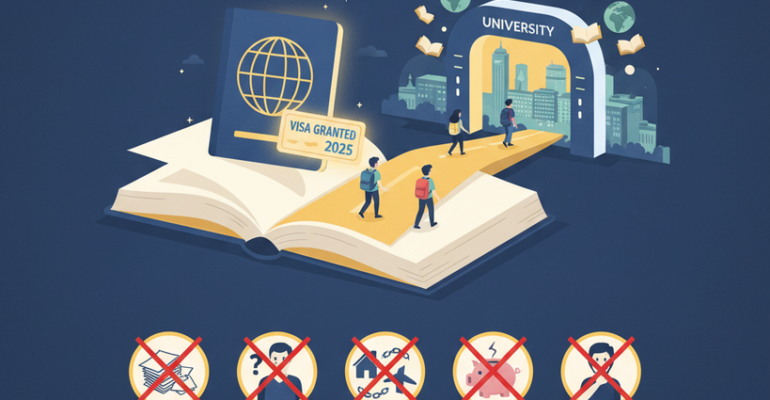
Visa Application Success Guide 2025: How to Avoid Common Rejection Reasons
 scholarabroad
 “`html
Your 2025 Roadmap to Student Visa Success: Navigating the Process with Confidence
Estimated reading time: 8 minutes
Key Takeaways
- Financial proof is the #1 reason for rejection—demonstrate stable funds covering 115-120% of costs
- Your Statement of Purpose must tell a compelling, consistent story about your academic journey
- Establish strong home country ties to prove you’ll return after studies
- Meticulous documentation prevents automatic refusals from small errors
- Visa interview preparation is crucial—practice answers to common questions
Table of Contents
- Understanding the Top 5 Reasons for Student Visa Rejection in 2025
- 1. Inadequate or Unconvincing Proof of Financial Resources
- 2. A Weak or Inconsistent Statement of Purpose (SOP)
- 3. Lack of Strong Ties to Your Home Country
- 4. Incorrect or Incomplete Documentation
- 5. Poor Performance in the Visa Interview
- Your Proactive Strategy for a Successful Student Visa Application
- Step 1: Start Early and Get Organized
- Step 2: Master the Financial Documentation
- Step 3: Craft a Compelling Narrative
- Step 4: Prepare for the Interview Like a Pro
- Partnering for Success: How Scholar Abroad Can Help
- Conclusion: Your Future Awaits
Understanding the Top 5 Reasons for Student Visa Rejection in 2025
The dream of studying abroad is an exhilarating one, filled with visions of world-class campuses, cultural immersion, and a global degree. However, for many, the first major hurdle isn’t the academic acceptance letter—it’s the student visa application. A visa rejection can feel like a door slamming shut on your international ambitions. But what if you could approach the process with absolute confidence, knowing you’ve mitigated the most common pitfalls?
This comprehensive guide for 2025 is designed to be your strategic partner. We’ll move beyond the basic checklist and delve into the why behind visa approvals and rejections, equipping you with the knowledge to present a bulletproof application. At Scholar Abroad, we’ve guided thousands of students through this journey, and we’re sharing our insider insights to help you secure your future.
Forewarned is forearmed. By understanding where others have stumbled, you can strategically strengthen your own application. Immigration officers are looking for genuine, prepared, and financially stable students.
1. Inadequate or Unconvincing Proof of Financial Resources
This is, without a doubt, the single biggest reason for visa refusal. The immigration authorities need to be certain that you can afford your tuition and living expenses without resorting to unauthorized work. Simply showing a bank statement with a large, recent deposit is a major red flag.
How to Avoid This:
- Show Financial History: Provide bank statements for the last 4-6 months to demonstrate a stable and consistent financial history.
- Cover All Costs: Ensure your funds cover not just the first year’s tuition, but also living expenses, health insurance, and travel costs.
- Explain Large Deposits: If there is a large, one-time deposit (e.g., from the sale of an asset or a gift from a relative), include a signed affidavit or a letter explaining its source.
- Use Multiple Documents: Supplement bank statements with loan sanction letters, scholarship awards, or proof of fixed deposits.
2. A Weak or Inconsistent Statement of Purpose (SOP)
Your SOP is your story. It’s your chance to speak directly to the visa officer and convince them of your genuine intent to study. A generic, plagiarized, or poorly reasoned SOP is a fast track to rejection.
How to Avoid This:
- Be Specific and Personal: Clearly articulate why you chose this specific course, this particular university, and this country. How does it align with your past academic and professional experiences and your future career goals?
- Demonstrate Coherence: Your entire application—from your previous transcripts to your chosen course—should tell a logical, progressive story. A business graduate applying for a culinary arts program needs a very compelling and well-explained reason.
- Address Gaps Proactively: If you have gaps in your education or employment, don’t ignore them. Explain them honestly and focus on what you learned during that time.
3. Lack of Strong Ties to Your Home Country
Visa officers need to be convinced that you will return to your home country after your studies. This is known as demonstrating non-immigrant intent. If they suspect you are using the student visa as a backdoor route to permanent immigration, your application will be denied.
How to Avoid This:
- Show Family and Economic Ties: Highlight family dependents, property ownership, or a job prospect waiting for you upon your return.
- Connect Your Goals to Your Home Country: In your SOP, explain how your international education will make you a valuable asset to your home country’s economy or society.
- Outline a Clear Post-Study Plan: Briefly mention your career aspirations back home and how your new degree is a critical step in achieving them.
4. Incorrect or Incomplete Documentation
Seemingly small errors can have massive consequences. Using outdated forms, forgetting to sign a document, or providing inconsistent information (e.g., different names or dates across different forms) signals carelessness and can lead to an automatic refusal.
How to Avoid This:
- Follow the Checklist Meticulously: Use the official embassy or consulate checklist. Do not rely on third-party blogs for the final list of required documents.
- Double-Check for Consistency: Ensure your name, date of birth, and passport number are identical on your application form, passport, financial documents, and acceptance letter.
- Translate and Certify: Any document not in the official language of the host country must be translated by a certified translator.
5. Poor Performance in the Visa Interview
If your chosen country requires an interview, this is your final and most personal test. Appearing nervous, giving rehearsed or inconsistent answers, or failing to understand the officer’s questions can undermine an otherwise strong application.
Your Proactive Strategy for a Successful Student Visa Application
Now that you know the pitfalls, let’s build a proactive strategy for your 2025 application.
Step 1: Start Early and Get Organized
Begin gathering your documents at least 3-4 months before your intended application date. Create a digital and physical folder for all your paperwork. This includes your passport, academic transcripts, test scores, university acceptance letter, and financial documents. Early preparation reduces stress and gives you time to correct any discrepancies.
Step 2: Master the Financial Documentation
Go beyond the minimum. Calculate your total first-year costs and ensure your proof of funds covers 115-120% of that amount. If you have a sponsor, ensure their financial documents are robust and accompanied by a notarized affidavit of support. This is the cornerstone of your application.
Step 3: Craft a Compelling Narrative
Your application is a story. Your SOP is the climax, but every document is a supporting chapter. Your academic records show your preparation, the university acceptance shows your qualification, and your financial proof shows your capability. Weave them all together into a coherent, authentic narrative of a serious student with a clear plan.
Step 4: Prepare for the Interview Like a Pro
Preparation is the key to confidence. Practice answering common questions with a friend or mentor: Why did you choose this university? Why not pursue a similar degree in your home country? What are your career goals after graduation? How will you fund your education? Your answers should be concise, honest, and consistent with the information in your written application. Be prepared to talk knowledgeably about your course modules and the university’s faculty.
Partnering for Success: How Scholar Abroad Can Help
Navigating the student visa process can be complex and overwhelming. At Scholar Abroad, our mission is to demystify this journey. Our expert advisors provide personalized guidance, from reviewing your financial documents and polishing your Statement of Purpose to conducting mock visa interviews that simulate the real experience. We help you build an application that is not just complete, but compelling.
Conclusion: Your Future Awaits
A student visa rejection is not the end of your dream; it’s often just a lesson in the process. By understanding the common reasons for refusal and taking a meticulous, strategic approach to your 2025 application, you dramatically increase your chances of success. Remember, the goal is to present yourself as a genuine student, a solid investment for the host country, and a future alumnus who will make their university proud. With careful preparation and the right guidance, you can confidently step forward and claim your place in the global classroom.
“`